Related Topics
To Germantown, a Short Appreciation
Seven miles from the heart of Philadelphia, Germantown was once a separate town, the cultural center of Germans in America. Revolutionary battles were fought here, it was briefly the capital of the United States, and it still has an outstanding collection of schools and colleges.
Philadelphia Medicine
The first hospital, the first medical school, the first medical society, and abundant Civil War casualties, all combined to establish the most important medical center in the country. It's still the second largest industry in the city.
City of Rivers and Rivulets
Philadelphia has always been defined by the waters that surround it.
Popular Passages
New topic 2013-02-05 15:24:06 description
City Hall to Chestnut Hill
There are lots of ways to go from City Hall to Chestnut Hill, including the train from Suburban Station, or from 11th and Market. This tour imagines your driving your car out the Ben Franklin Parkway to Kelly Drive, and then up the Wissahickon.
Philadelphia Reflections (6)
New topic 2017-02-06 21:23:28 description
Germantown Nurses the Yellow Fever, 1793
|
|
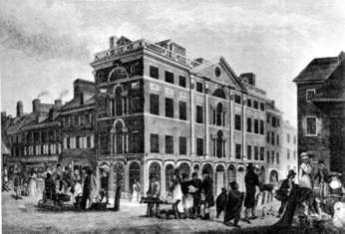
Yellow Fever, Phila
|
The French Revolution continued from 1789 to 1799 and created the opportunity for a second revolution in the New World which a second overstretched European country would lose. The slaves of Haiti just about exterminated the white settlers, except for the few who escaped, taking Yellow Fever and Dengue with them. Both diseases are mosquito-borne, so they flare up in the summer and die down in the winter, although the Philadelphians who welcomed the exiles didn't know that. Yellow Fever in Philadelphia was bad in 1793, came back annually for three more years, and flared up once again in 1798. It could be easily observed to be more frequent in the lowlands, absent in the hills. Seasonal, it reached a peak in October, disappeared after the first frost. In the early fall, people died a horrible yellow death, jaundiced and bilious.
|
|
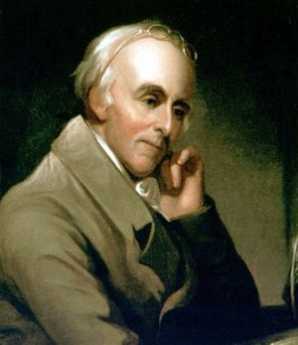
Dr. Rush
|
The Yellow Fever epidemic had a profound effect on many things. It was one of the major reasons the nation's capital did not remain in Philadelphia. It made the reputation of Dr. Benjamin Rush who announced a highly unfortunate treatment -- bleeding the victims -- thus provoking numerous anti-scientific medical doctrines based on the relative superiority of doing nothing at all. In Latin, Galen had capsulized the doctrine of Hippocrates in the "Epidemics" as premium non-nocere ("At least do no harm.") It took a full century for American scientific medicine to recover from this blow to its reputation. Whatever criticism Rush may deserve for his Yellow Fever blunder, it definitely is not true that he was a scientific lemon. Medical students are regularly surprised to learn that he is the physician who first identified and described the tropical disease of Dengue, or "break-bone fever", which was a somewhat less noticed feature among the Haiti exiles in Philadelphia. In still other scientific circles, Benjamin Rush is often referred to as the "Father of American Psychiatry". He was one of the founders of the College of Physicians of Philadelphia, the oldest medical society in North America. Medical colleagues who today scoff at the yellow fever episode seem to forget that Rush stayed behind to tend the sick during a devastating epidemic, while many of his more cautious colleagues fled for their lives. An unhesitating signer of the Declaration of Independence, whatever Rush did, he did courageously. Non-academic physicians have sarcastically referred to this episode ever since, as proving that "some people" think it is "better to publish than to perish".
One very good non-medical thing the Yellow Fever epidemic accomplished was to put an abrupt end to the torch-light parades of window-breaking rioters agitating, with Jefferson's approval, for an American version of the guillotine and the terror. Federalists like John Adams and William Bingham never forgave Jefferson or his admirers for this, so the class warfare movement might likely have got much worse if everyone had not suddenly dropped tools, and headed for the hilly safety of Germantown.
The President of the new republic, George Washington, was in Mt. Vernon in the summer of 1793, wondering what to do about the Yellow Fever epidemic, and particularly uncertain what the Constitution empowered him to do. He finally decided to rent rooms in Germantown and called a cabinet meeting there. His first rooms were rented from Frederick Herman, a pastor of the Reformed Church and teacher at the Union School, although he later moved to 5442 Germantown Ave, the home of Col. Franks. Jefferson chose to room at the King of Prussia Tavern.
During this time, Germantown was the seat of the nation's government. As was fervently hoped for, the cases of yellow fever stopped appearing in late October, and eventually, it seemed safe to convene Congress in Philadelphia as originally scheduled, on December 2.
Although Germantown was badly shaken by the experience, it was a heady experience to be the nation's capital. Meanwhile, a great many rich, powerful and important people had come to see what a nice place it was. Germantown then entered the second period of growth and flourishing. Walking around Germantown today is like wandering through the ruins of the Roman forum, silently tolerant of visitors who would have never dared approach it in its heyday.
REFERENCES
| Benjamin Rush: A Discourse delivered before the College of Physicians of Philadelphia: Thomas A. Horrocks ASIN: B0006FCBXS |
Amazon |
| Bring Out Your Dead: The Great Plague Of Yellow Fever In Philadelphia In 1793: J.H. Powell ISBN-13: 978-1436715881 |
Amazon |
| Germantown and the Germans: An Exhibition from the Collection of the Library Company of Philadelphia: Edwin, II Wolf ISBN-13: 978-0914076728 |
Amazon |
Originally published: Thursday, June 12, 1997; most-recently modified: Friday, May 03, 2019
| Posted by: Me | May 18, 2017 10:59 PM |
| Posted by: Me | Feb 20, 2012 4:01 PM |
| Posted by: gfnmlgfhxnkhl | Jan 25, 2012 12:09 PM |
| Posted by: jijiajfiajiajgvioa | Dec 13, 2011 6:23 PM |
| Posted by: crazy kid 23 | Dec 6, 2011 2:52 PM |
| Posted by: jerreth adams | Dec 6, 2011 2:31 PM |
| Posted by: v | Dec 6, 2011 9:46 AM |
| Posted by: Avalon Blue | Nov 29, 2011 5:47 PM |
| Posted by: maddi | Sep 12, 2011 3:10 PM |
| Posted by: peper | Apr 12, 2011 3:18 PM |
| Posted by: Rose | Apr 10, 2011 3:52 PM |
| Posted by: farabi | Feb 7, 2011 12:32 PM |
| Posted by: kari r. | Jan 14, 2011 12:10 PM |
| Posted by: pennfield | Jan 11, 2011 12:17 PM |
| Posted by: pennfield project | Jan 11, 2011 12:16 PM |
| Posted by: Briana Baird | Jan 8, 2011 10:15 AM |
| Posted by: [none] | Nov 16, 2010 9:43 AM |
| Posted by: Laila | Sep 29, 2010 9:09 PM |
| Posted by: jro | Jun 10, 2010 4:38 PM |
| Posted by: Steph | May 7, 2010 9:49 AM |
| Posted by: some1 | Apr 20, 2010 12:05 PM |
| Posted by: Jill | Apr 5, 2010 1:12 PM |
| Posted by: Amanda | Mar 21, 2010 11:13 PM |
| Posted by: haihai | Mar 11, 2010 2:12 PM |
| Posted by: KR | Mar 10, 2010 2:27 PM |
| Posted by: tina | Feb 18, 2010 8:25 PM |
| Posted by: Diamond | May 21, 2009 2:13 PM |
| Posted by: Conner Cook | Mar 9, 2009 7:12 PM |
| Posted by: tyler | Feb 13, 2009 11:49 AM |
| Posted by: [none] | Feb 5, 2009 5:28 PM |
| Posted by: Melina | Jan 4, 2009 3:09 PM |
| Posted by: liting | Nov 25, 2008 10:24 AM |
| Posted by: Ima Nonymous | Nov 24, 2008 4:31 PM |
| Posted by: lydia | Sep 16, 2008 6:23 PM |
| Posted by: katie holmes | Feb 22, 2008 12:08 PM |
| Posted by: sadie bullock | Mar 13, 2007 11:54 PM |