Related Topics
Quakers: The Society of Friends
According to an old Quaker joke, the Holy Trinity consists of the fatherhood of God, the brotherhood of man, and the neighborhood of Philadelphia.
A Quaker Carillon
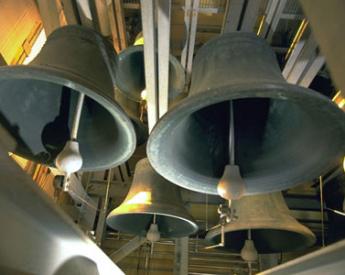
|
| Carillon Bells |
A bell in a belfry tolls the same note, over and over. A carillon is a collection of bells, each a different size and shape, producing a different note. If they all toll together, they make a jangling noise. If tolled in a certain sequence, with a certain timing -- they play a tune.
Carillons were first and best devised in the low countries of Holland and Belgium. The oldest one, and the finest ones are found there, perhaps because some were re-used. When wars approached, they were taken down and melted into cannons. When the war was over, the cannons could be melted into an improved carillon. Those who hate war-- can sometimes go forward, even from war.
Like a tuning fork, a large bell sounds its tone for several seconds. When a second note follows closely, it must be in the same key or register, harmonious, or it will clash. But a second note which waits its turn -- is a companion, and the two then stand together, inviting a third to join them.
Small bells last longer than big ones. Big ones must be struck harder, eventually wearing a flat spot, which produces a flatter tone. In time, the off-key vibration causes the bell to crack -- right at the place that once began as its sweet spot.
Originally published: Tuesday, March 10, 2009; most-recently modified: Friday, May 10, 2019
| Posted by: George Fisher | Mar 14, 2009 9:00 PM |
Jeff Davis
University Carillonist
The Department of Music
University of California, Berkeley
| Posted by: Jeff Davis | Mar 11, 2009 10:24 AM |